Exploring Synchronization Techniques for Reel Dynamics and Group Card Play Across Mobile Interfaces
Written by Nils Schröder · Sep 3, 2026

Exploring Synchronization Techniques for Reel Dynamics and Group Card Play Across Mobile Interfaces
Developers have refined synchronization methods that connect spinning reel outcomes with live card table actions on smartphones and tablets, allowing players to move between individual slot sessions and group card competitions without losing state consistency across devices. These approaches rely on server-side coordination that tracks reel positions, random number generator seeds, and card deck distributions in real time, while mobile clients receive incremental updates through persistent connections.
Core Mechanisms for Reel and Card State Alignment
Reel dynamics require precise timing because each spin result must match the server record exactly, yet mobile networks introduce variable delays that can disrupt sequence integrity. Engineers address this by implementing timestamped event logs that reconcile differences between the device clock and central servers, using predictive buffering to preload upcoming reel frames during periods of stable connectivity. Group card play adds layers of complexity since multiple participants share a common deck state, and every draw or bet must propagate to all connected sessions simultaneously.
Observers note that hybrid systems combine WebSocket channels for low-latency card updates with periodic HTTP polling for reel verification, creating a layered protocol stack that maintains both speed and accuracy. Data from industry reports shows these combined methods reduce desynchronization incidents by measurable margins during peak evening hours when thousands of sessions run concurrently.
Handling Latency and Device Variability
Mobile hardware differs widely in processing power and screen refresh rates, so synchronization layers incorporate adaptive rendering that adjusts animation speed to match available resources while preserving outcome fidelity. Players switching between Wi-Fi and cellular data encounter further challenges because signal handoffs can interrupt ongoing sequences. Solutions include client-side reconciliation algorithms that detect gaps and request missing reel or card data packets without halting the entire game flow.
According to findings published by the American Gaming Association, mobile sessions involving both reel and card elements grew substantially through the first half of 2026, prompting operators to invest in edge computing nodes that sit closer to regional networks. These nodes cache recent game states and forward only differential changes, cutting round-trip times for players in metropolitan areas.
Integration of Multiplayer Elements with Reel Sequences
Designers have built frameworks that let accumulated credits from reel sessions transfer directly into card tournaments, requiring synchronized ledgers that update across both game types. When a player completes a reel round, the resulting credit total appears instantly in the card lobby interface, and vice versa, through shared database transactions that commit only after confirmation from both subsystems. This linkage supports extended play patterns where users alternate between solo spinning and group competition within the same account session.
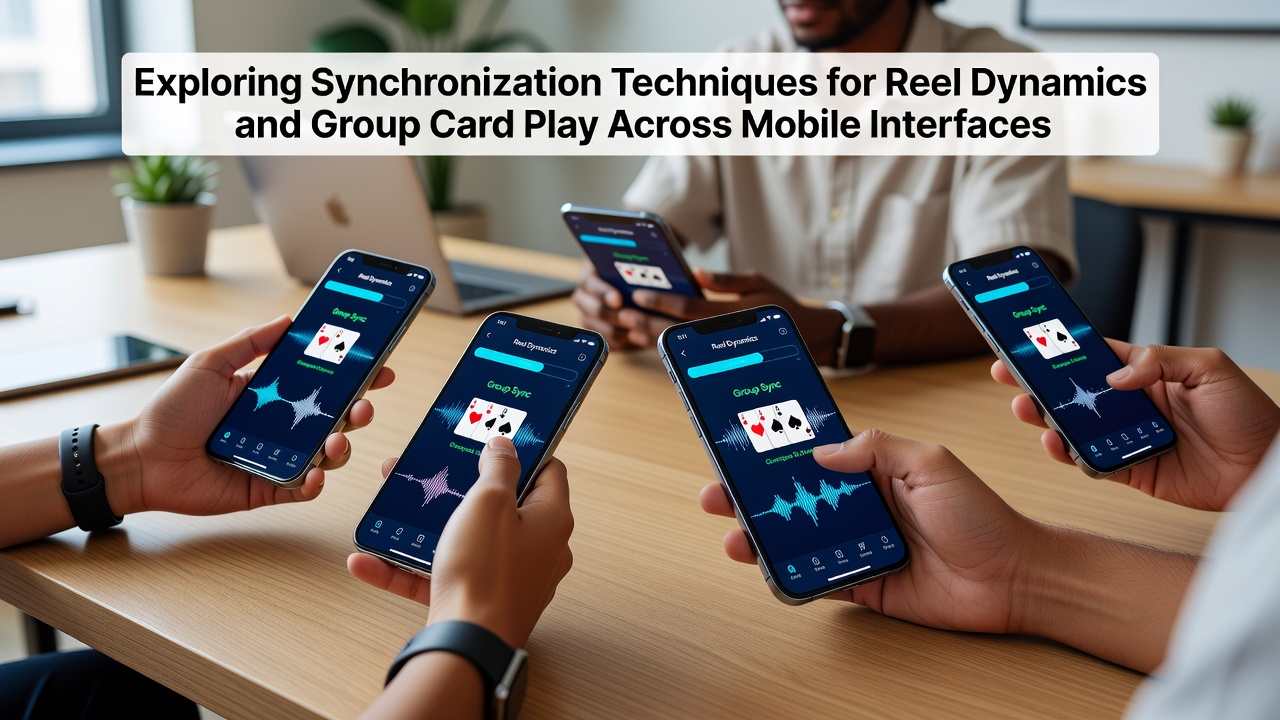
Research from the University of Nevada's gaming technology lab examined packet loss scenarios on various carrier networks and found that forward error correction applied to card draw messages prevents most visible disruptions. Reel spin confirmations, meanwhile, use checksum verification that triggers automatic resends only when mismatches appear, keeping overall bandwidth usage contained even during extended group events.
September 2026 Developments and Platform Standards
By September 2026 several major operators had deployed updated synchronization libraries that support cross-device session migration, allowing a player to begin a reel sequence on one smartphone and finish the associated card round on a tablet without manual intervention. These updates follow guidelines circulated by the Canadian Gaming Association, which emphasize consistent state representation across operating systems. Implementation data indicates that migration success rates exceeded 98 percent in controlled tests conducted during the summer months.
Engineers continue to refine conflict resolution routines that handle simultaneous actions, such as a reel bonus trigger occurring at the same moment another participant places a card bet. Priority queues assign higher precedence to card events in competitive settings while preserving reel outcome randomness, ensuring fairness metrics remain within regulatory thresholds set by bodies like the New Jersey Division of Gaming Enforcement.
Conclusion
Synchronization techniques for reel dynamics and group card play continue to evolve as mobile interfaces handle larger concurrent user bases. The combination of timestamp reconciliation, adaptive buffering, and edge-cached state delivery provides the foundation for seamless transitions between individual and multiplayer formats. Ongoing measurements from regulatory and academic sources confirm that these methods sustain consistent game integrity across diverse network conditions and device types.